
Key benefits
Why farm the ocean? Explore it layer by layer.
A regenerative sea farm works from the surface to the seabed at once. Tap each layer to see what it gives back.
Every benefit, in one place
Seventeen reasons, no downsides.
There are so many reasons a community should be farming the ocean — locally and globally. Here's the full picture.
Restore
Putting life and resilience back into the sea.
Restores damaged marine environments rather than depleting them.
Attracts fish and other wildlife.
Turns ocean deserts into places teeming with life.
Farms act as natural storm and swell breaks.
Sustain
Clean, self-running, and good for the planet.
A genuinely sustainable way to grow food.
Completely self-sustaining and environmentally friendly.
No fertiliser, chemicals, antibiotics or feed required.
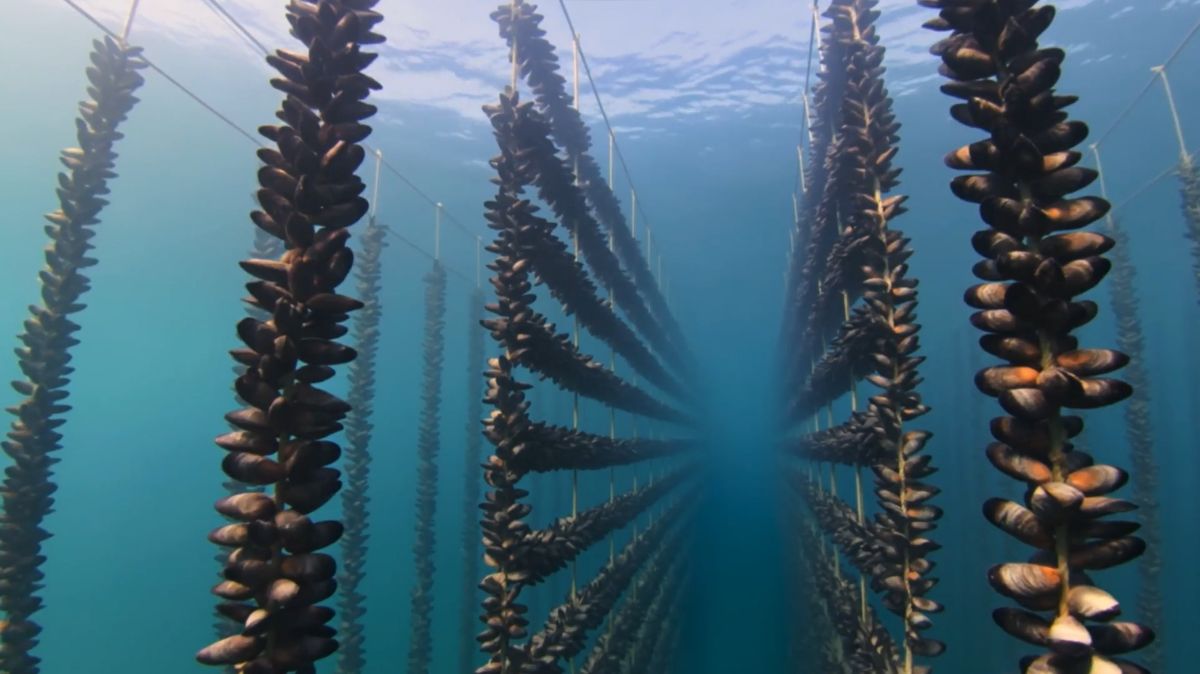
Shellfish are superb natural water filters.
Seaweed draws down carbon from the atmosphere.
Seaweed thrives on — and extracts — excess nitrates.
Prosper
A real industry, and real regional jobs.
Strong profit potential as the model scales.
Creates employment, especially in regional communities.
Relatively simple to establish without huge upfront investment.
Hundreds of uses — as food and in countless products.
Place
Made for Bruny, the Channel and beyond.
Ideal for Bruny, the Channel and Tasmania's east coast.
Barely visible, with no noise — activity happens below the surface.
A sustainable alternative to over-stretched land agriculture.
One farm. Every one of these at once.
That's what makes integrated multi-trophic aquaculture different — the benefits stack, from the surface to the seabed.